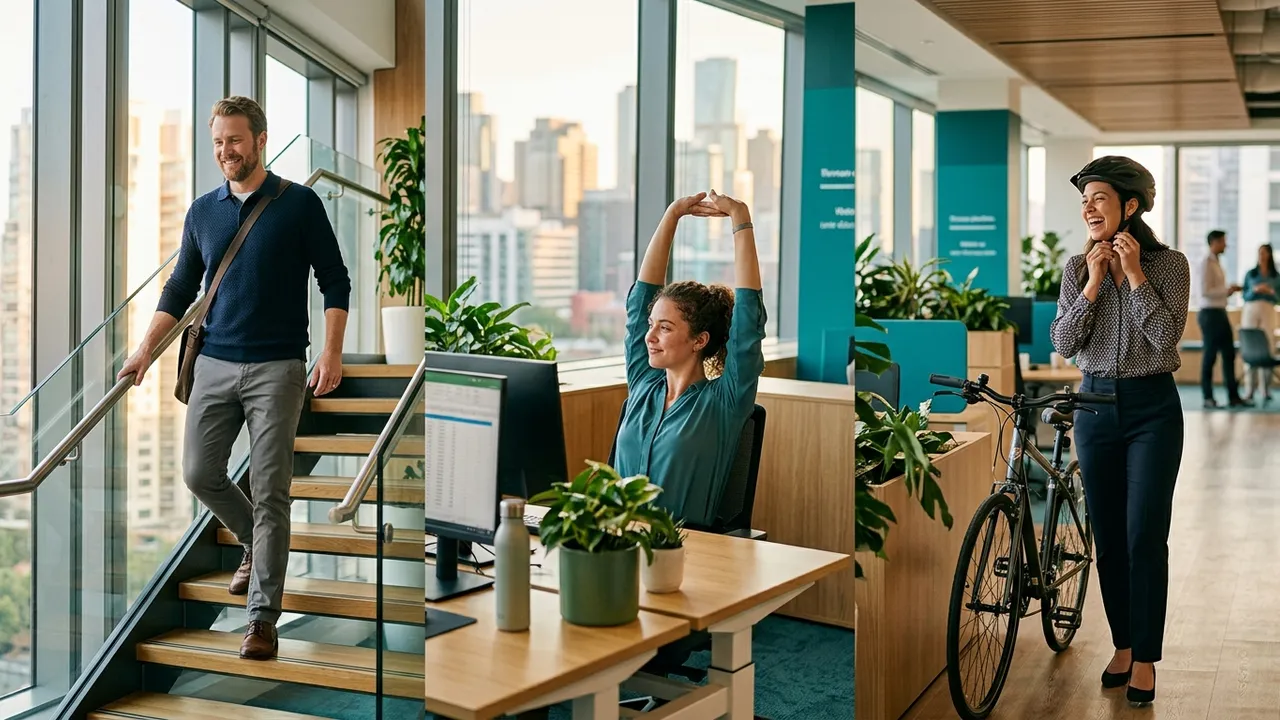
The most common excuse for too little movement in the office is time. Yet an effective movement break doesn't require an hour, workout clothes, or a free afternoon – just five minutes and a moment of decision.
What is possible in five minutes?
A short stretching routine for shoulders and neck, standing up and sitting down five times, one walk down the hallway and back – it sounds modest, yet it has measurable effects on circulation, back muscles, and mood. Movement breaks interrupt long sitting blocks at exactly the moment the body benefits from it most. Those who integrate them into the workday, rather than tacking them on, create a routine that sticks.
Guided, self-directed, or together – which approach works?
Video-guided break exercises offer structure for anyone who doesn't know what to do in five minutes. Self-direction works for people who simply stand up and stretch – without instructions. And the shared approach, where an entire team briefly stands up together at 11:00 a.m., creates the strongest social commitment. What matters isn't the format, but the consistency. You will find more measures and how they fit in the field of action Movement.
How do you put the measure in place?
- 1Define two or three low-threshold formats that work without changing clothes – e.g. a 5-minute movement break, standing meeting, stairs-instead-of-lift week
- 2Put together a short collection of exercises (4–5 exercises for the workstation) and prepare it as a PDF or notice
- 3Suggest a fixed time for the daily movement break that does not clash with core appointments
- 4Present the offers and stress that taking part is voluntary and possible without sports clothing
- 5Try a first short movement break together right away, so that the barrier falls
- 6Hand out the exercise collection and set a visible starting point (e.g. “From Monday, every day at 2 pm”)
- 7Keep the daily movement break visible as a recurring calendar invitation
- 8Launch a changing micro-offer every week (active meeting, walk to the meeting, steps week)
- 9Take part regularly yourself and encourage colleagues without building up pressure
- 10Ask the team which formats went down well and which fizzled out
- 11Select two or three offers that should stay as a permanent routine
- 12Make successes visible (e.g. number of shared movement breaks) and announce the next round
What do you need for it?
- Effort
- under 30 min
- Cost
- Free
- Setup
- 30 min
- ✓ Easy to implement
- ✓ High acceptance
- ✓ Fast results
Tax and health insurance: what is possible
Employer health benefits can be tax-free under § 3 no. 34 of the German Income Tax Act (EStG) up to €600 per employee per year — if they are provided in addition to the salary already owed and are either certified (§ 20 SGB V) or implemented within the company's health promotion process. Gym memberships and corporate fitness are not covered. For ZPP-certified courses (e.g. from Upfit), German statutory health insurers can reimburse all or part of the course fee to their insured members — then only the amount exceeding that reimbursement is tax-free. Projects within the company can be funded under § 20b SGB V, with no entitlement. Only your tax adviser can confirm the tax exemption.
How it works in EasyWHP
This Best Practice in EasyWHP: adopt it, adapt it, measure the effect
Once adopted, the measure is ready in EasyWHP — with instructions, an invitation and surveys before and after. You adapt what fits your company and see at the end what it achieved.
Screenshots with demo data, no real people.
Adopt it for your company
Register for free — and the measure is ready to go in your cockpit: invitation, feedback survey and appointment are already set up. First cycle, first numbers for the boss.
Try EasyWHP for freeRather take a look first? To the live demo →
Contributes to
Measure the impact with
Action field
Physical Activity →A fitting occasion
- International Day of Movement (May 10): Company Movement Day
Related Best Practices
Not sure where to start? Self-check in approx. 7 minutes →